You paid for the mold. Your supplier made it, and now it sits in their factory. What happens to it if you change supplier, or the relationship breaks down? Many buyers only ask this question when the answer is already expensive.
This guide explains tooling ownership in plain terms. It covers the separate tooling agreement, how to identify each tool, inspection rights and the terms for getting a mold back.
It is written for UAE importers and B2B buyers who order custom parts. It is general information, not legal advice. Have a qualified lawyer review the final contract.
In this article
- What tooling ownership means
- Why who owns the mold is not obvious
- Mold ownership in China: what to check
- Tooling ownership clauses: the 8-point agreement
- Tooling ownership proof: how to identify and mark every tool
- Inspection rights and tool records
- Mold protection agreement: confidentiality and no copying
- Getting the mold back: release and delivery
- Common mistakes
- 5 steps before you pay for tooling
- Frequently asked questions
What tooling ownership means
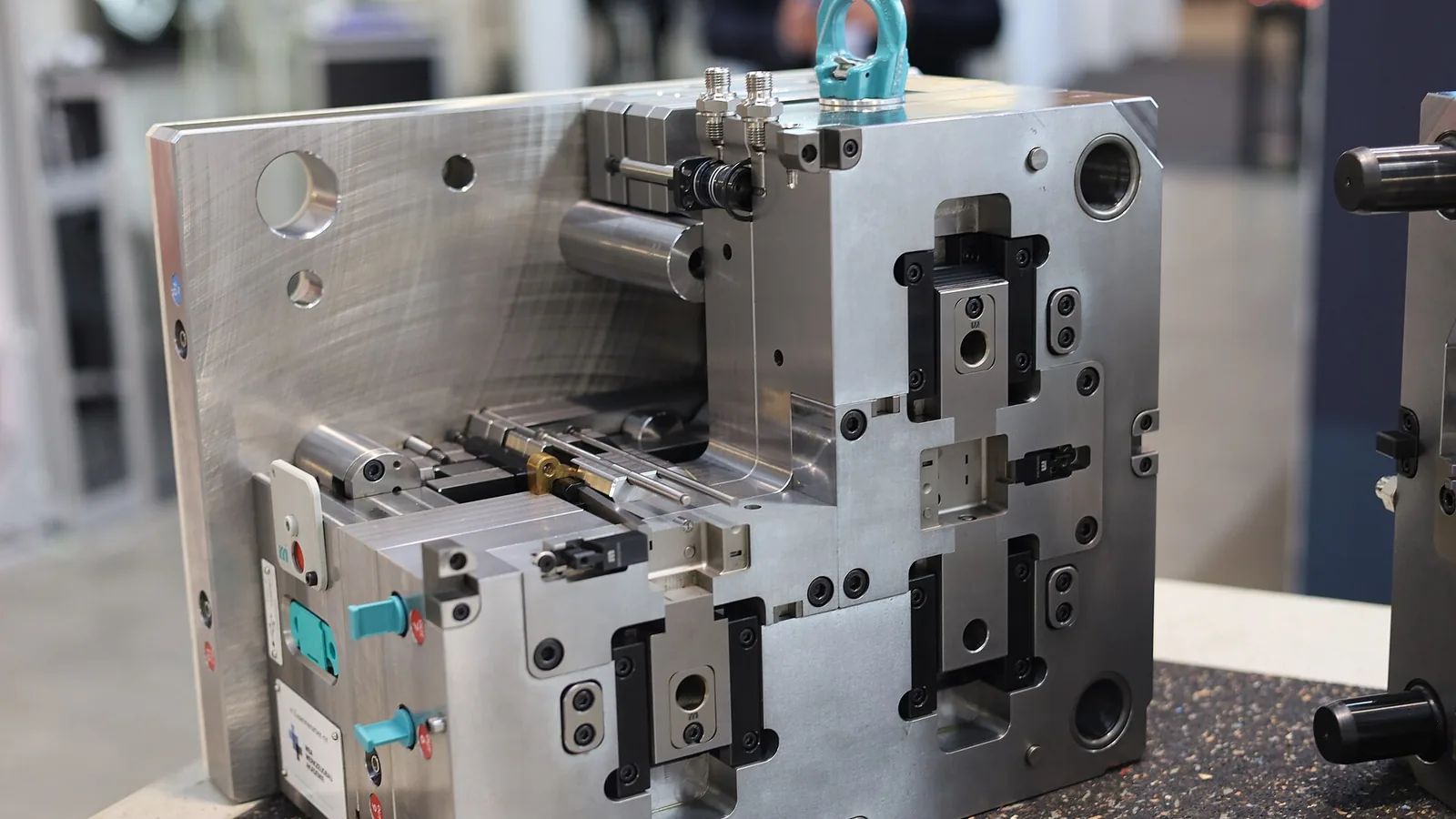
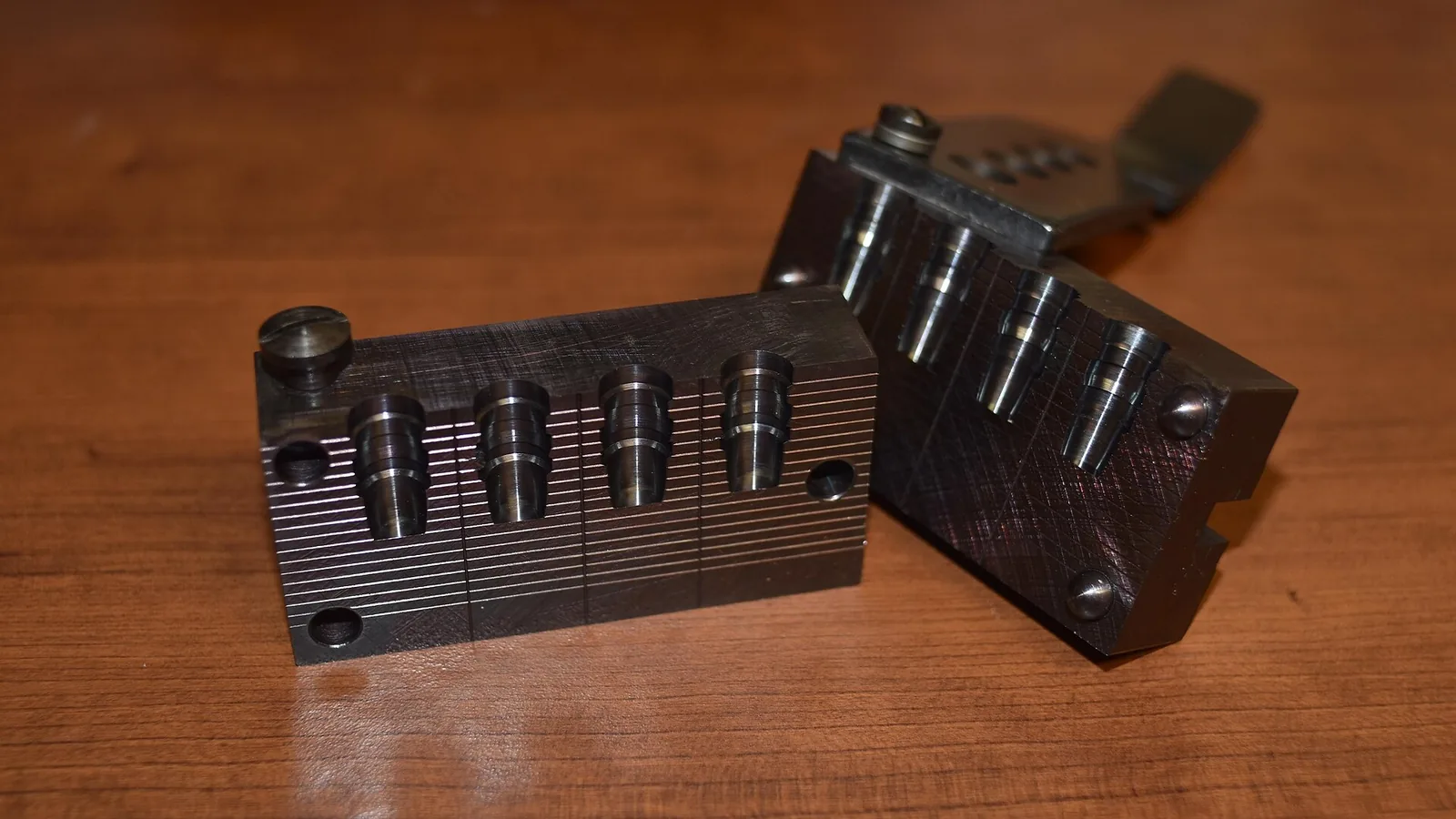
Tooling is the set of tools made to produce your part. It includes injection molds, die-casting dies, stamping dies, jigs, fixtures and gauges. A custom product usually cannot be made without it.
Tooling ownership answers one question: who has the right to control each of these tools? That includes who may use it, move it, sell it or scrap it.
Paying for the tool and owning the tool are not always the same thing. Some suppliers charge a tooling fee but keep the mold on their books. Others treat the fee as a contribution to their own asset.
So the first job is to write down what the fee buys. If the answer is not on paper, you are relying on trust.
Why who owns the mold is not obvious
A mold is heavy, specialised and kept at the factory. You rarely see it after the first samples are approved. That distance is where problems start.
Common situations include:
- The supplier uses your mold to make the same part for other buyers.
- The supplier refuses to release the mold during a price or quality dispute.
- The mold is moved to a subcontractor without telling you.
- A worn mold is repaired badly, and part quality drops.
- The mold cannot be identified because nothing marks it as yours.
None of these is certain to happen. But all of them are easier to prevent than to fix. Clear tooling ownership terms and a record of each tool are cheap compared with a new mold.
Your own bargaining position also matters. The supplier knows that a replacement mold costs money and weeks of time. Read our guide on negotiating with Chinese suppliers for ways to raise these points early, before the tooling invoice is paid.
Mold ownership in China: what to check
For many buyers, mold ownership in China is the main worry, because so much custom manufacturing is done there. The rules on tooling ownership that apply depend on the contract and on the law that governs it. Do not assume that a payment receipt proves ownership.
Before you pay, check three things.
- Who is the contracting party? A trading company may place your order with a factory you never meet. Ask where the tool will physically sit. Our trading company vs manufacturer guide explains the difference.
- Which law and which court or arbitration body applies? Ask a lawyer who knows the supplier’s country to review this part.
- Is the agreement in a language the factory management can read? A bilingual version avoids disputes about meaning.
For wider background on intellectual property risks, see the US International Trade Administration guide to protecting intellectual property in China. For a full overview of how we work with factories there, read our page on sourcing from China.
Tooling ownership clauses: the 8-point agreement
Do not hide tooling terms inside a general purchase order. To settle tooling ownership, use a separate tooling agreement, or at least a separate schedule, signed by both sides. It should be short and specific.
The table below lists the clauses most buyers look for. Your lawyer may add or change them.
| Clause | What to write | Why it matters |
|---|---|---|
| 1. Ownership statement | The buyer owns the tool and everything made for it, from the date of payment. | Removes doubt about who owns the mold. |
| 2. Tool list | Each tool by number, part name, drawing version and cavity count. | Lets you prove which tools are yours. |
| 3. Marking | A permanent plate or engraving with the buyer’s name and tool number. | Shows ownership to anyone who sees the mold. |
| 4. Use limits | The tool may be used only for the buyer’s orders. No sales to third parties. | Stops the same mold serving other buyers. |
| 5. Maintenance | Who pays for routine repair and who approves major changes. | Keeps part quality steady over the tool life. |
| 6. Storage and location | Named site, insurance, and written approval before any move. | Prevents silent transfer to subcontractors. |
| 7. Inspection | The buyer or an agent may inspect the tool and records on notice. | Makes the other clauses checkable. |
| 8. Release | Delivery of the tool on request, with a deadline, place and cost split. | Lets you change supplier without a fight. |
Price terms also belong here: the tooling fee, payment stages and what happens if you cancel. If the fee is split, say which part is paid at design approval and which after samples.
If you buy under your own brand, link the tooling terms to your product rights too. Our private label sourcing guide explains how custom products and OEM rights fit together.
Tooling ownership proof: how to identify and mark every tool
A document states your tooling ownership. A marking proves that the mold on the floor is the one in the document. You need both.
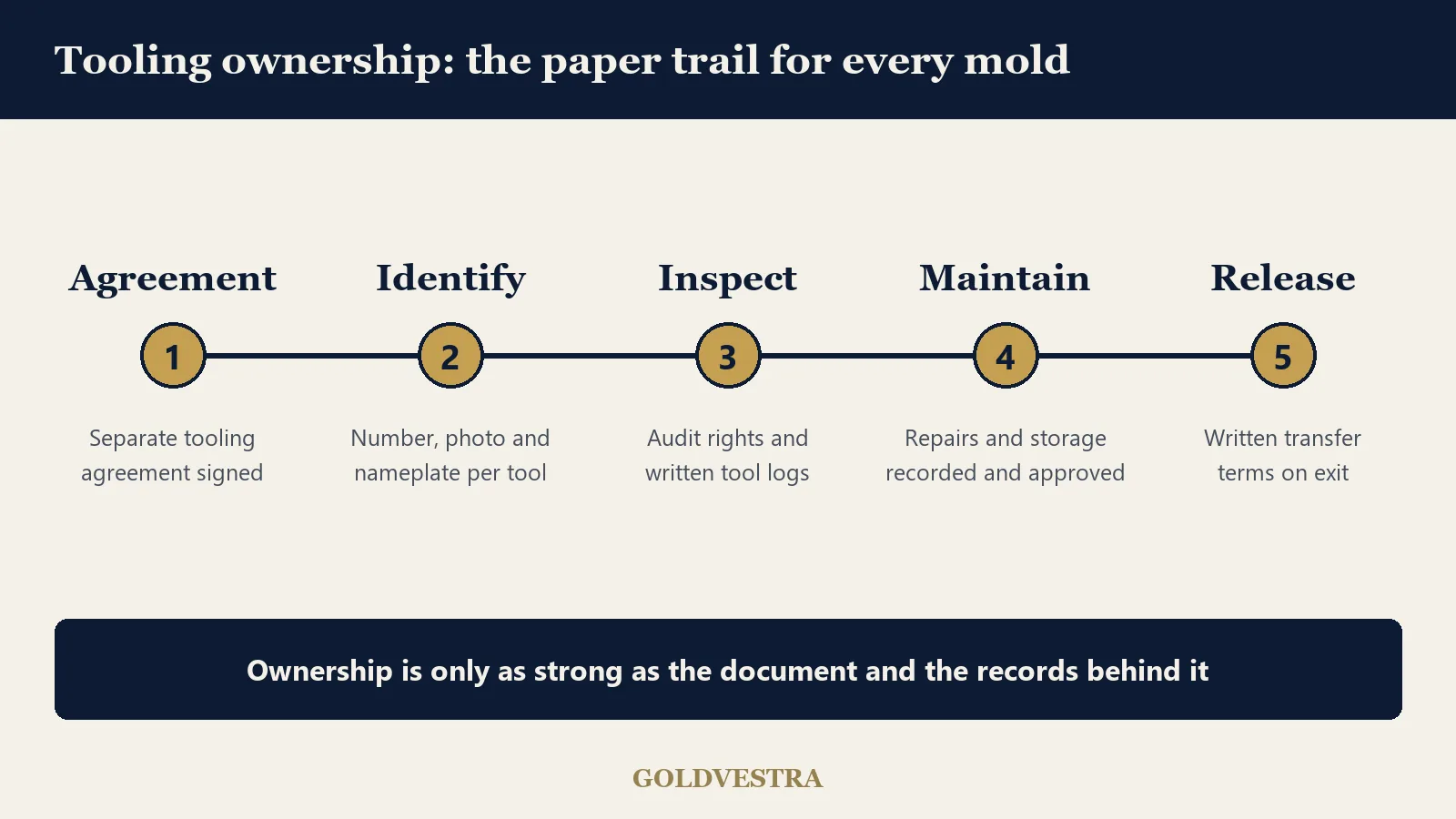
- Give every tool a number. Use the same number in the agreement, the invoice and the production record.
- Attach a nameplate. Ask for a metal plate or engraving with your company name and the tool number.
- Take dated photos. Photograph the tool, the plate and the cavity before it ships to production.
- Keep the drawing version. Record which revision of your drawing the tool matches.
- List the spares. Inserts, cores and other wear parts belong to the tool too.
Ask the supplier to confirm the list in writing after each new tool or major repair. Keep these files with your order records, not only on the supplier’s side.
Inspection rights and tool records
Tooling ownership rights you cannot exercise are not much use. Write in the agreement that you, or an agent you name, may visit the factory and look at the tool and its records. A short notice period is normal.
Ask the factory to keep a simple tool log for each mold. It should show:
- Total shots or cycles run on the tool.
- Dates and details of every repair or modification.
- Storage location when the tool is not in production.
- Which orders the tool was used for.
A third-party inspection or a visit by a sourcing agent can check the log against the real tool. If you manage several suppliers, our international procurement service can support supplier checks and documentation on your behalf.
Mold protection agreement: confidentiality and no copying
Tooling ownership does not by itself protect your design. A mold protection agreement covers the information behind the tool: drawings, specifications and know-how.
Keep it practical. Cover these points:
- The supplier may not make or sell parts from your design to anyone else.
- Drawings and files stay confidential, also after the order ends.
- No overruns: the supplier produces only the quantities you order.
- Subcontractors are named and bound by the same terms.
- Scrap and rejected parts are destroyed or returned, not sold.
A non-disclosure agreement is the usual starting point. For a general overview of how confidential business information can be protected, see the WIPO overview of trade secrets. Registration of designs, patents or trademarks is a separate step: ask an intellectual property lawyer what applies to your product.
Getting the mold back: release and delivery
The release clause is where tooling ownership is tested in practice. It decides whether you can move production when you need to.
Good release terms are specific. They state:
- A trigger: a written request from the buyer, or the end of the contract.
- A deadline: a fixed number of days after the request.
- A condition: the tool is delivered clean, complete and with its spare parts and tool log.
- A place and a cost split: who packs, who ships and who insures.
- A rule for unpaid balances: what must be settled before release.
The last point deserves care. Suppliers often want any open invoice paid first. That can be fair, but it should be tied to undisputed amounts only. Otherwise a disputed invoice can block your mold.
Think about the move too. Ask how the tool will be crated and shipped, and plan the new supplier’s trial run. If you need a hand with a transfer, you can request a quote and describe the tool, its location and your target date.
Common mistakes
- Assuming that paying the tooling fee settles tooling ownership.
- Treating tooling ownership as a detail to sort out later.
- Leaving tooling terms out of the contract.
- Not numbering or marking the tools.
- Never visiting or auditing the factory after samples are approved.
- Letting the supplier move the mold without written approval.
- Signing a contract the supplier’s staff cannot read.
- Skipping a lawyer’s review because the order seems small.
Each mistake is cheap to avoid at the start and costly to fix later. Add a tooling check to your routine for every new custom product.
5 steps before you pay for tooling
- Ask for the quotation in writing. It should state what the tooling fee covers and whether the buyer owns the result.
- Sign the tooling agreement first. Do not pay the first instalment until both sides have signed.
- Number and list each tool. Attach the list and drawing versions to the agreement.
- Confirm marking and photos when the tool is finished, before production starts.
- Schedule the first inspection. Put the visit and the log review in your calendar.
These five steps take little time and give you a clear record of tooling ownership. Combined with legal advice, they cover most of the risk in tooling ownership for custom orders.
Frequently asked questions
What is tooling ownership?
Tooling ownership is the legal right to control the molds, dies, jigs and fixtures made for your product. It covers who may use, move, sell or scrap each tool. It is set by your contract, so write it down in a tooling agreement rather than relying on payment alone.
Who owns the mold if the buyer pays for it?
Tooling ownership depends on the contract and the governing law. Payment alone may not be enough proof. A written agreement should state that the buyer owns the tool, list each tool by number and describe how it is marked. Ask a lawyer to confirm the position in your case.
What should a tooling agreement include?
It should include an ownership statement, a numbered tool list, marking rules, limits on use, maintenance and storage terms, inspection rights and release terms. It should also cover the tooling fee and payment stages. Keep it separate from the general purchase order and have a lawyer review it.
How can I protect my mold in China?
Put tooling ownership in a bilingual tooling agreement, number and mark every tool, keep dated photos, and inspect the tool and its log. Add confidentiality and no-copy terms. Check which law and dispute process applies, and ask a lawyer who knows the supplier’s country to review the documents.
Can a supplier refuse to release my mold?
Without clear tooling ownership and release terms, it can become a dispute. A good agreement sets a trigger, a deadline, the condition of the tool and how unpaid balances are handled. If a supplier refuses, take legal advice on the contract and the local law before acting.
What is a mold protection agreement?
It is a contract, or a set of clauses, that protects the information and the tool behind your product. It supports tooling ownership by limiting copying, sales to third parties and overruns. It also keeps drawings confidential and binds subcontractors. It works best together with a tooling agreement and a non-disclosure agreement.
Related reading
Private Label Sourcing
How to find a manufacturer for your brand.
Negotiating with Chinese Suppliers
Tactics for B2B buyers.
Trading Company vs Manufacturer
Who should you buy from?
Planning custom tooling for your product?
Tell us the part, the quantity and where the mold will be made. We will help you structure supplier checks and documents before you pay for tooling.