
The core trade-off: time, cost and cargo
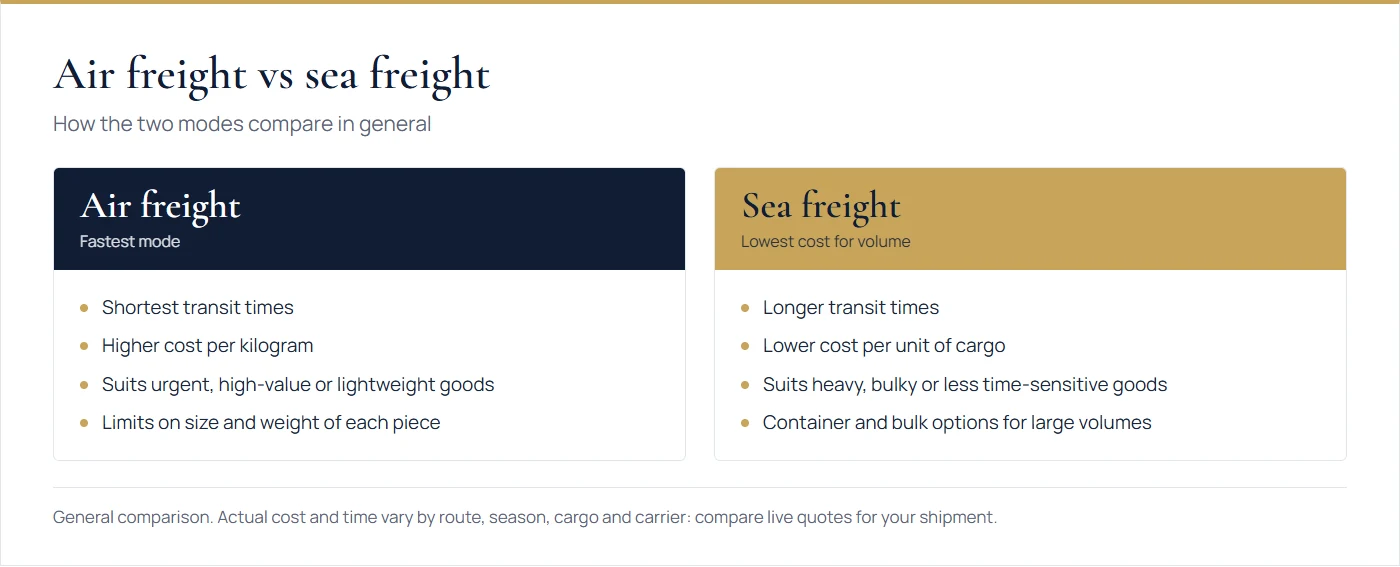
Every international shipment sits somewhere on a triangle of speed, cost and suitability for the cargo. Air freight moves goods in days and keeps them in carrier custody for less time, but it costs far more per unit of weight and has tighter limits on size and dangerous goods. Sea freight takes weeks and adds port handling and schedule risk, but it is usually much cheaper per unit moved and can carry almost anything that fits in a container or on a vessel.
The mistake many first-time importers make is to compare the two on freight rate alone. A cheaper ocean rate can lose its advantage once you add the stock you must hold while waiting, the cash tied up in transit, extra handling for part-container loads and the cost of a missed sales window. This guide shows how each mode is priced, how to work out chargeable weight, and a short framework for deciding. Rates and transit times change constantly, so none are quoted here; always get current written quotes.
Your choice of mode also constrains your trade terms. FOB, CFR, CIF and FAS are sea-only rules, so an air shipment needs FCA, CPT, CIP or another any-mode rule. Our Incoterms guide for importers explains the difference.
Your freight options
Most B2B importers choose among five modes or combinations. Each suits a different mix of urgency, volume and value.
Air freight
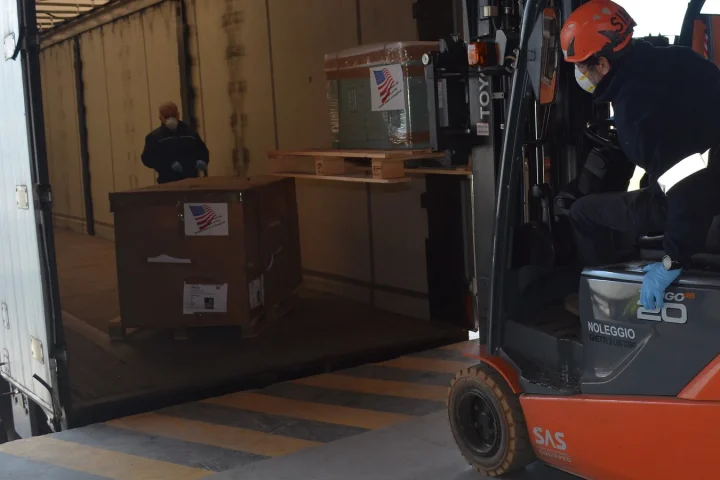
The fastest option, with frequent departures on many routes. Best for urgent, high-value, perishable or lightweight goods and for samples and spare parts. Priced on chargeable weight, with surcharges for fuel and security.
Sea freight, FCL
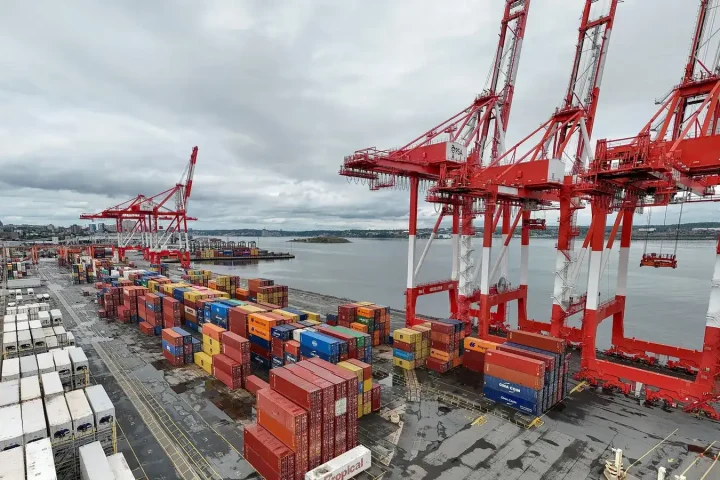
Full container load: you book a whole 20-foot, 40-foot or high-cube container. You pay per container, not per kilogram, so the cheaper unit cost comes from filling it. Suits steady volumes and heavy or bulky goods.
Sea freight, LCL
Less than container load: your cargo shares a container with other shippers and is consolidated and deconsolidated at ports. Handy for smaller orders, but expect extra handling, extra time at both ends and per-unit pricing.
Road and rail
Trucking works between neighboring markets, for example within the GCC or between countries with connected road networks. Rail is an option on some long overland corridors, such as China to Europe, and usually sits between air and sea on time.
Multimodal and sea-air
Goods travel by two or more modes under a coordinated plan, such as ocean to a hub followed by a flight. Useful when pure sea is too slow and pure air too costly, if the route and cargo fit.
Chargeable weight explained
Airlines have limited space and weight capacity, so they charge for whichever your cargo uses more of. Chargeable weight is the greater of the actual (gross) weight and the volumetric weight. For most general air cargo, volumetric weight in kilograms is calculated as length × width × height in centimeters, divided by 6,000. That equals about 167 kg per cubic meter. Some express couriers use a divisor of 5,000, so always confirm which one your carrier applies.
Sea freight uses a similar idea. LCL is typically priced per “freight tonne,” the greater of one metric ton or one cubic meter. The sea equivalent therefore treats one cubic meter as 1,000 kg, while air treats it as about 167 kg. That is why light, bulky cargo is far more expensive to fly than its weight suggests.
A worked example (hypothetical)
Take two shipments of the same carton, 60 × 50 × 40 cm, which is 0.12 cubic meters. The figures are invented for illustration, and no rates are used.
Shipment A is 40 cartons of lightweight goods at 12 kg each. Actual weight is 480 kg and total volume is 4.8 cubic meters. Each carton’s volumetric weight is 120,000 ÷ 6,000 = 20 kg, so 40 cartons come to 800 kg. By air you pay for 800 kg to move 480 kg, a 67% premium over the scale weight. By LCL the chargeable quantity is 4.8 freight tonnes, because volume exceeds the 0.48 tonne weight.
Shipment B is 10 cartons of dense goods at 250 kg each. Actual weight is 2,500 kg and volume is 1.2 cubic meters. Volumetric weight is only 200 kg, so air is charged on the actual 2,500 kg. By LCL the chargeable quantity is 2.5 freight tonnes, because weight now exceeds the 1.2 cubic meters. Same carton, opposite outcomes: A is volume-driven, B is weight-driven. Ask your forwarder to show both figures on every quote.
FCL or LCL: choosing the sea option
A 20-foot container holds roughly 33 cubic meters, a 40-foot roughly 67 and a 40-foot high-cube roughly 76, though exact internal dimensions and weight limits vary by container and line. FCL is priced per container regardless of how full it is, while LCL is priced per freight tonne plus consolidation charges at origin and destination.
There is no fixed break-even point. As LCL volume grows, the per-tonne cost of consolidation starts to look expensive next to a whole container, and many importers get both quotes once volume reaches a substantial fraction of a 20-foot box. FCL also means one set of documents, fewer touches and a lower chance of damage or delay at the consolidation hub. If you are shipping several smaller orders, ask whether they can be combined into one FCL. Our logistics coordination service can help plan this where legally permissible.
Costs beyond the freight rate
Compare modes on the total cost from the supplier’s door to yours, not the headline rate. Ask each quote to list these items separately.
- Origin pickup and handling at the supplier’s location
- Export clearance and documentation fees
- Terminal handling at origin and destination
- Fuel, security and other surcharges (air) and bunker or currency adjustments (sea)
- Consolidation and deconsolidation fees for LCL
- Import duty, VAT and customs brokerage
- Destination delivery to your warehouse
- Demurrage, detention and storage if cargo or containers are held
- Cargo insurance
- Cost of inventory held and cash tied up during transit
A simple framework for choosing a mode
Run each shipment through these questions. They will usually point to one option quickly.
How urgent is the cargo?
Work out the real deadline. If a late arrival means a lost sale or a stopped production line, the extra cost of air may be cheaper than the delay. If stock is comfortable, sea is usually the answer.
What is the value density?
Divide the cargo’s value by its chargeable weight. High value per kilogram, such as electronic components or samples, can absorb air rates. Low value per kilogram, such as raw materials or building products, rarely can.
What does the cargo require?
Check size, weight per piece, fragility, temperature control and whether the goods are dangerous. Lithium batteries, chemicals and other regulated goods face tighter rules by air, and some items must be declared and packed in a specific way.
How much volume and how often?
Regular full containers support FCL contracts and predictable schedules. Small, irregular orders suit LCL or air. Consider splitting an order: a first batch by air and the balance by sea is a common compromise.
Compare total landed cost and risk
Put the quotes side by side, including inventory cost and the risk of delay. Our article on import cost factors shows what belongs in that comparison.
Documents and handling differ by mode
The transport document changes with the mode. Air uses an air waybill, which is a receipt and contract of carriage but not a document of title. Sea uses a bill of lading, which can be negotiable, or a sea waybill, which is not. Road shipments between contracting states often use a CMR consignment note. Each mode has its own cut-off times, booking lead times and release procedures, so build them into your plan rather than assuming cargo moves the moment it is ready.
Sea freight adds port congestion, container availability and transshipment risk, while air adds capacity constraints, especially at peak season. Environmental impact also differs: air generally produces far higher emissions per tonne-kilometer than sea, which some buyers weigh in their decision. The paperwork for each route is covered in our trade documentation checklist.
Plan around real quotes
Rates, surcharges, capacity and transit times vary by route, season and carrier, and some cargo is restricted or prohibited by air, sea or road. This article is general information, not a quotation or professional advice. Confirm current rules and prices with your forwarder and the authorities of the countries involved.
Air and sea freight questions
Is air freight always more expensive than sea freight?
Per kilogram, yes, in almost every case. But total cost depends on chargeable weight, cargo value and the cost of delay. For small, high-value or urgent shipments, air can be the cheaper total solution once inventory and lost-sales costs are counted.
What is chargeable weight?
It is the weight a carrier uses to price air cargo: the greater of actual weight and volumetric weight. Volumetric weight is usually length × width × height in centimeters divided by 6,000, though some carriers use 5,000.
When does LCL stop making sense?
When your volume approaches a significant share of a container, the per-tonne consolidation charges can exceed the cost of booking a whole container. Ask your forwarder to quote both FCL and LCL for the same cargo and compare the totals.
Can I split one order between air and sea?
Yes. A common approach is to send a small first batch by air to start selling or production and ship the remainder by sea. Plan the documents and Incoterms rule for each leg, since an air leg cannot use sea-only terms.
What is sea-air freight?
Sea-air combines an ocean leg to a transshipment hub with an onward flight. It is sometimes used to cut transit time compared with all-sea and cost compared with all-air, but availability depends on the route and the cargo.
Related reading and services
Logistics Coordination
Planning transport and carriers for your shipments, where legally permissible.
Import & Export Coordination
Coordinating the steps between supplier, carrier and customs.
Incoterms Guide for Importers
Match your trade term to the mode you choose.
Import Cost Factors
Everything that adds to the supplier’s price.
Planning a shipment and unsure which mode fits?
Share your cargo details, destination and deadline. Submit your requirements and we will include transport options in the sourcing assessment and the commercial proposal.