
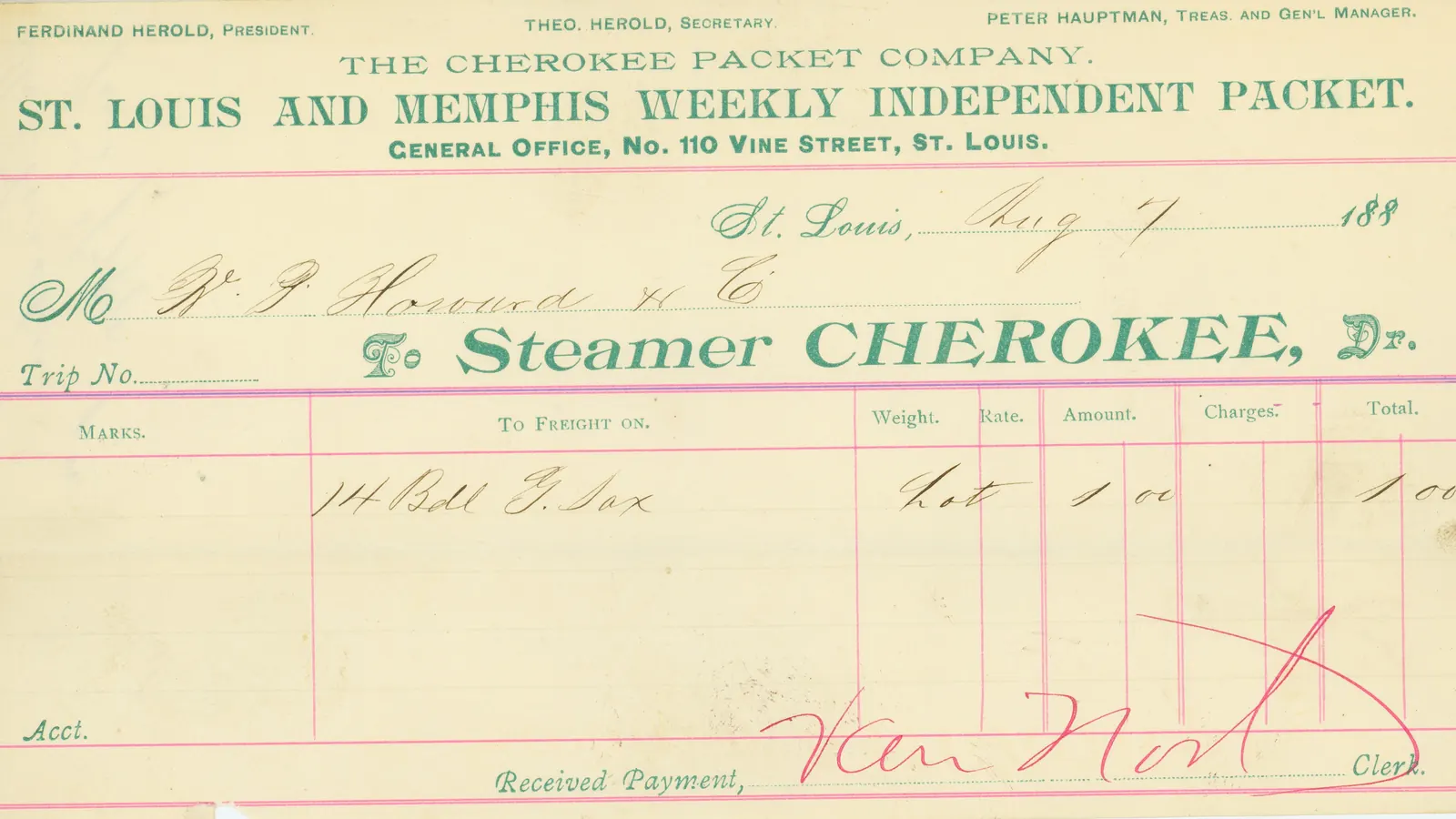
The goods are on the water. Then the shipping line, the bank or customs asks for the “original B/L”, and the name on it is spelled differently from your invoice. Cargo can sit in port while the paperwork is fixed, and storage charges keep running.
A bill of lading is the one document that links the supplier, the carrier and you. This guide explains what it does, the main types of bill of lading, the fields worth checking and the errors that most often delay release. It is general information, not legal or customs advice.
In this guide
- What a bill of lading is
- Types of bill of lading
- Straight and order bills
- Seaway bill vs bill of lading
- Other labels you will see: clean, claused, master and house
- Key fields to check
- Common errors
- In the UAE: what happens at arrival
- A short checklist before you accept the draft
- Frequently asked questions
What a bill of lading is
A bill of lading, often shortened to B/L, is a document issued by the carrier or its agent for goods moved by sea. It is the core transport document in most container and bulk shipments. The wider paper set is covered in our international trade documentation checklist.
It does three jobs:
- Receipt. The carrier confirms it received the goods, in the stated quantity and apparent condition.
- Evidence of the contract of carriage. It records the terms under which the carrier moves the cargo.
- Document of title. A negotiable bill controls who may collect the goods. Not every type does this.
Your supplier or their forwarder asks the carrier to issue it after the cargo is loaded. You then receive copies for checking, and originals or an electronic release for collecting the goods. Who books the ship depends on the trade term, so read our Incoterms guide first.

Types of bill of lading
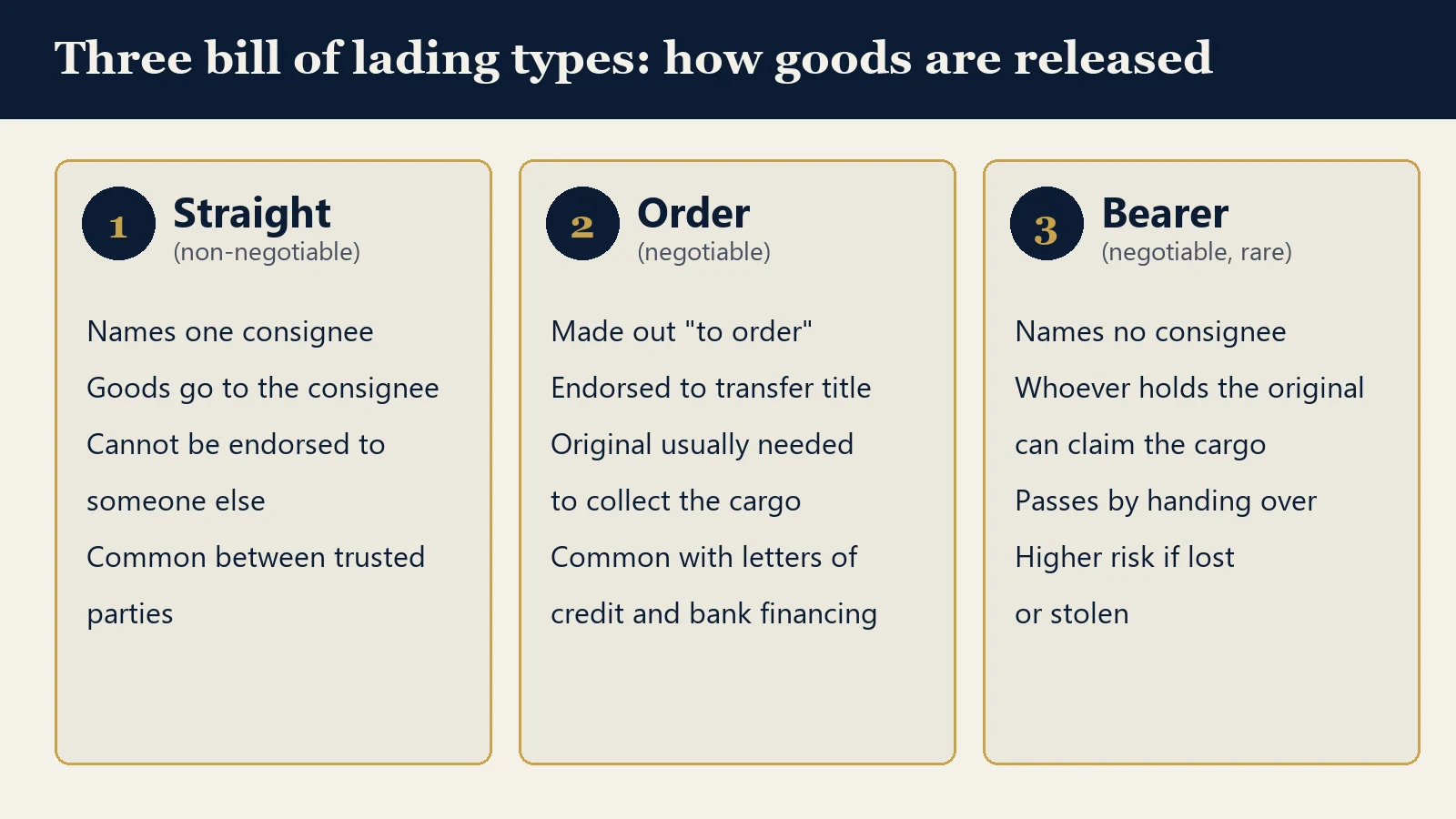
Most importers meet three main types of bill of lading. They differ in who can claim the cargo and whether the document can be transferred.
| Type | Consignee field | Transferable? | Typical use |
|---|---|---|---|
| Straight | A named party | No | Trusted buyer, open account, intra-group shipments |
| Order | “To order” or “to order of” a named party | Yes, by endorsement | Letters of credit, bank financing, goods sold in transit |
| Bearer | Blank or “to bearer” | Yes, by delivery | Rare, because a lost original is a serious risk |
Always confirm the type with your supplier before loading. Changing it afterwards usually means amendment fees and delay.
Straight bill of lading vs order bill of lading
Straight bill of lading
A straight bill of lading names one consignee. The carrier delivers to that party and nobody else, and the bill is not a negotiable document. It suits buyers who pay by open account or have paid in advance, because no bank needs to control the cargo.
Release practice varies by carrier and country. Some carriers release against proof of identity, others ask for the original. Ask the carrier or agent for the exact rule on your route.
Order bill
An order bill says the goods are consigned “to order” or “to the order of” a named party, often the shipper or a bank. The holder transfers rights by endorsing the document and handing over the original set. This is why banks prefer it under a letter of credit. See our guide to payment terms in international trade for how the payment method shapes the document.
The risk is practical. If the endorsed originals are late or lost, you cannot collect the cargo, even though you have paid.
Seaway bill vs bill of lading
A sea waybill, sometimes searched as a “seaway bill”, is a receipt and contract of carriage that is not a document of title. It names a consignee and the carrier delivers to that party without an original document being presented.
| Point | Negotiable B/L | Sea waybill |
|---|---|---|
| Document of title | Yes | No |
| Original needed to collect | Usually yes | No |
| Goods sold in transit | Possible by endorsement | Hard to do |
| Fit with a letter of credit | Common | Only if the credit allows it |
| Speed at destination | Slower if originals travel by courier | Faster, nothing to present |
For short routes and trusted suppliers, a waybill can save days. For goods bought on a letter of credit, or goods you may resell while at sea, a negotiable bill is usually the safer choice. Check what your bank and your buyer accept.
Other labels you will see: clean, claused, master and house
Besides the three main types, you will see these descriptions on drafts and in bank requirements:
- Shipped on board. The goods are loaded on a named vessel on a stated date. Banks usually want this rather than “received for shipment”.
- Clean. The carrier noted no defect in the goods or packing on loading.
- Claused. The carrier added a remark, for example about damaged cartons. A claused bill can be refused by a bank.
- Master. Issued by the shipping line to the forwarder or consolidator.
- House. Issued by the forwarder to the individual shipper in a consolidated or LCL load. Our FCL vs LCL article explains why that matters.
- Electronic. A digital version with the same functions. The Digital Container Shipping Association publishes standards for electronic bills. Check that your carrier, bank and customs agent accept it.
Key fields to check on a bill of lading
Ask for a draft before the carrier issues the final document. Compare these ten fields line by line with the commercial invoice, packing list and purchase order.
| Field | What to check |
|---|---|
| 1. Shipper | Matches the seller named on the invoice and the contract |
| 2. Consignee | Exact legal name and address; “to order” if the bank requires it |
| 3. Notify party | Your clearing agent or you, with working contact details |
| 4. Vessel and voyage | Matches the booking and the shipping instructions |
| 5. Ports of loading and discharge | Correct ports, spelled as the contract states |
| 6. Description of goods | Consistent with the invoice and the HS code description |
| 7. Marks, packages, weight, volume | Same figures as the packing list |
| 8. Container and seal numbers | Correct, complete and readable |
| 9. Freight terms | “Prepaid” or “collect” agrees with the trade term |
| 10. Date, place and number of originals | On-board date fits the contract; number of originals is clear |
Do not treat the draft as a formality. Once the vessel sails, every correction costs time, and sometimes money.
Common bill of lading errors
These eight errors are among the most common causes of delay:
- Name or address mismatch. The consignee differs from the invoice, even by one word or letter.
- Missing or wrong notify party. The agent is not told the cargo has arrived.
- Weight or package count that does not match the packing list.
- Goods described differently from the invoice or the customs declaration.
- Wrong freight term. The bill says “prepaid” while the trade term says you pay at destination, or the reverse.
- Late on-board date. The date falls after the latest shipment date in the contract or letter of credit.
- Claused bill. Remarks about packing or condition make the document unacceptable to a bank.
- Missing endorsement or originals. An order bill without a correct endorsement, or an incomplete set, cannot be used to take delivery.
Fix errors at the draft stage. After sailing, you may need an amended bill, a letter of indemnity or a re-issue, all of which take time. If a bank is involved, its checks on document consistency are strict, so even small differences can lead to a refusal.
Bill of lading in the UAE: what happens at arrival
For a bill of lading UAE importers receive, the same logic applies. The shipping line or its agent issues a delivery order against the bill of lading. Your clearing agent then lodges the customs declaration using the bill together with the invoice and packing list.
Requirements and portals change, so confirm the current rules with Dubai Customs or your clearing agent. Our trade documentation service reviews these documents before shipment, and logistics coordination keeps the booking, the bill and the arrival aligned.
Duty and costs depend on the declared goods, so read the UAE import duty guide and the air vs sea freight comparison if you are still choosing a mode. For the trade terms behind the freight clauses, the ICC Incoterms rules page is the official reference.
A short checklist before you accept the draft
- Agree the bill type with the supplier and your bank in writing.
- Ask for the draft at least a day before the carrier issues the final bill.
- Check all ten fields against the invoice, packing list and purchase order.
- Confirm how originals travel, or whether a telex release or electronic release is used.
- Send corrections in one message, listing each field.
- Share the final copy with your clearing agent as soon as it arrives.
Bill of lading: frequently asked questions
What is a bill of lading?
A bill of lading is a document issued by a carrier for goods shipped by sea. It acts as a receipt for the cargo, evidence of the contract of carriage and, if negotiable, a document of title. Importers need it to collect the goods and to clear them through customs.
What are the main types of bill of lading?
The main types are straight, order and bearer. A straight bill names one consignee and cannot be transferred. An order bill is made out “to order” and is transferred by endorsement. A bearer bill names no consignee, so whoever holds it can claim the goods.
What is a straight bill of lading?
A straight bill names a specific consignee, and the carrier delivers only to that party. It is not negotiable, so it cannot be endorsed to someone else. It is common where the buyer has paid in advance or trades on open account, and no bank controls the cargo.
What is the difference between a seaway bill and a bill of lading?
A B/L can be a negotiable document of title, and the original is usually needed to collect the cargo. A sea waybill is not a document of title, and the carrier delivers to the named consignee without an original. A waybill is faster; a negotiable bill gives more control.
Do I need the original bill of lading to clear goods in the UAE?
It depends on the type of bill and the carrier. With a negotiable bill, the shipping line normally needs the original or an agreed release before it issues the delivery order. With a waybill or a straight bill, the rule may differ. Confirm with the carrier and your clearing agent.
Who issues a bill of lading?
The carrier or its agent issues it after the cargo is loaded. In a consolidated shipment, the forwarder issues a house bill, and the shipping line issues a master bill to the forwarder. The shipper provides the details, so errors on the draft usually start there.
What happens if the B/L has an error?
Contact the supplier and the carrier at once. Depending on the error, the carrier may issue an amended bill, or a letter of indemnity may be needed. Corrections cost time and sometimes fees, and a letter of credit may require its own amendment. Checking the draft first avoids this.
Related pages and articles
Trade Documentation
Support with the documents behind a shipment.
Logistics Coordination
Keep booking, documents and arrival aligned.
Trade Documentation Checklist
The papers a standard shipment needs.
Air Freight vs Sea Freight
Choose the right mode for your cargo.
Want a second pair of eyes on your shipping documents?
Send us the draft bill of lading, the invoice and the packing list. We will review them with you and follow with a proposal.