
A shipment of drinks or tobacco products clears customs duty and VAT on paper. Then someone asks whether the importer is registered for excise tax. That question can stop a shipment and a payment plan.
This guide explains excise tax on imports UAE for B2B buyers, traders and procurement managers: which goods are covered, who must register with the Federal Tax Authority (FTA), how the tax is declared and paid, and how it sits next to customs duty and VAT.
It is general information, not tax advice. Rates and lists change, so check the current FTA list for your own goods before you sign a purchase order.
In this article
- What is excise tax on imports UAE importers face?
- Which goods attract excise tax on imports UAE importers must check?
- How the FTA publishes rates for excise tax on imports UAE
- Who must register for excise tax on imports UAE
- Declaring and paying excise tax on imports UAE
- Excise tax on imports UAE vs customs duty and VAT
- Pre-shipment checklist for excise tax on imports UAE
- Common mistakes
- Frequently asked questions
What is excise tax on imports UAE importers face?
Excise tax is an indirect tax on specific goods. The FTA describes them as goods that are typically harmful to human health or the environment. The main source for this guide is the Excise Tax Topics pages of the Federal Tax Authority.
The tax applies across the UAE. According to the FTA, any business that imports, produces or stockpiles excise goods, or releases them from a designated zone, must consider its registration and filing duties.
For an importer, excise tax on imports UAE-wide is a cost of bringing certain goods in, on top of the purchase price and freight. It is separate from customs duty and from VAT. It also comes with its own registration, declarations and returns.
The FTA also notes that it can audit businesses and impose penalties if obligations are not met. The responsibility to comply stays with the business.
Which goods attract excise tax on imports UAE importers must check?
The FTA’s overview lists the goods on which excise tax is currently applied:
- Tobacco and tobacco products.
- Liquids used in electronic smoking devices and tools.
- Electronic smoking devices and tools.
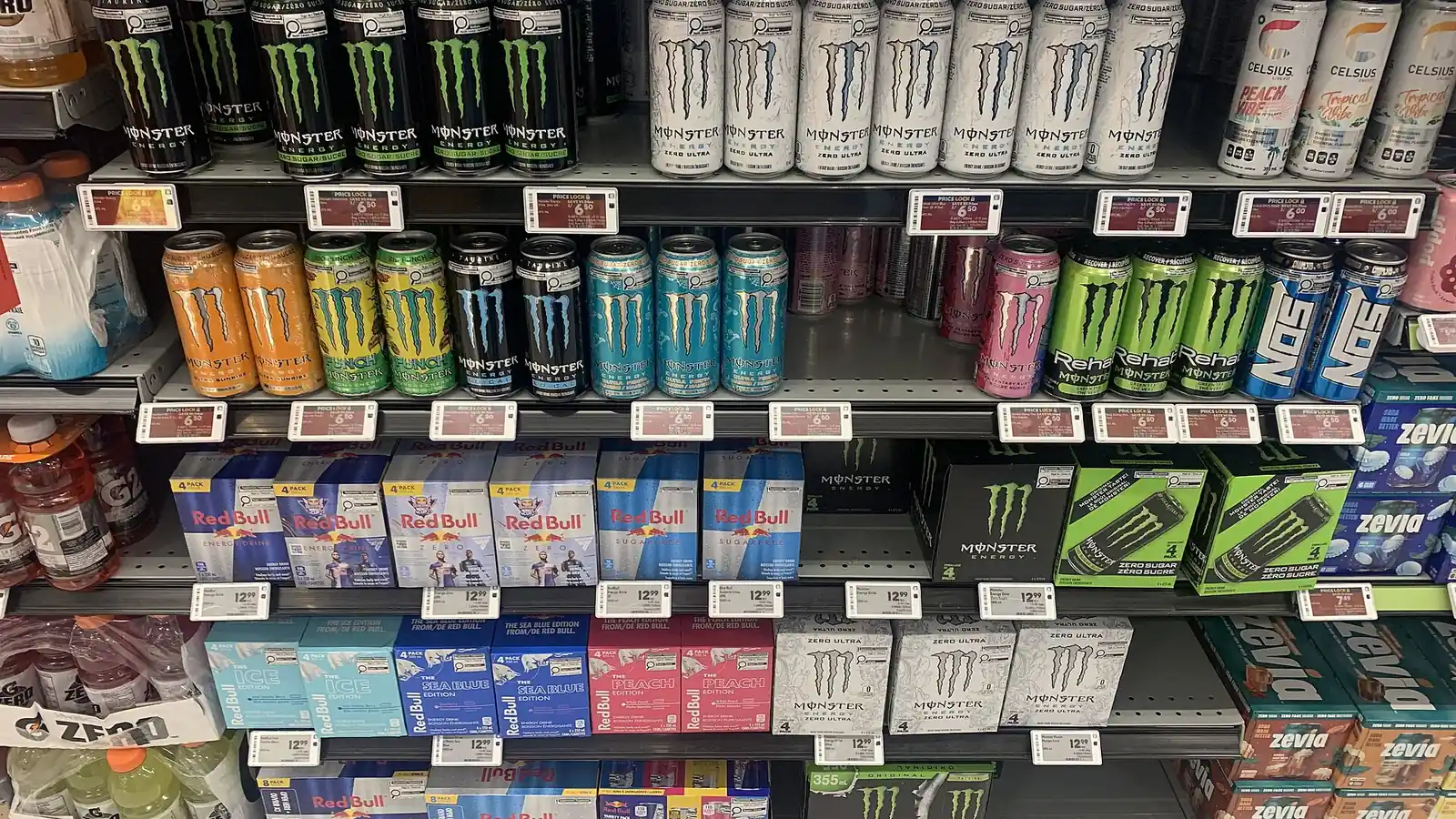
- Carbonated drinks (the FTA notes this excludes sparkling water).
- Energy drinks.
- Sweetened drinks.
The legal basis is Cabinet Decision No. 52 of 2019, as amended by Decision No. 99 of 2025. It sets the excise goods, the rates and how the excise price is calculated. See the FTA page on registering excise goods and calculating the tax.
Sweetened drinks and the sugar tiers
For sweetened drinks, the FTA describes a tiered-volumetric model that applies from 1 January 2026. The tax depends on total sugar per 100 ml instead of a fixed percentage. See the FTA page on the tiered-volumetric model for sweetened drinks.
The FTA page also lists drinks that are outside this model, including 100% natural fruit and vegetable juice with no added sugar or sweeteners, milk and dairy, and baby formula. It also says sugar content is tested by the Ministry of Industry and Advanced Technology and that products are registered or updated in FTA records.
Digital tax stamps for tobacco
The FTA also runs a Digital Tax Stamp scheme for tobacco. It sets enhanced standards for manufacturers and stakeholders who import and trade tobacco in the UAE. If you import tobacco, ask your broker how the scheme applies to your product.
How the FTA publishes rates for excise tax on imports UAE
Rates for excise tax on imports UAE-wide can be amended, so we do not copy a rate table here. The current rates are those published on the FTA website. Check the FTA list on the day you price an order.
What we can describe is how the FTA explains the method for excise tax on imports UAE-wide. For the goods charged at 100%, the published decision lists tobacco and tobacco products (except products meant only to help people stop smoking), liquids and devices for electronic smoking, and energy drinks.
The tax is not applied to your invoice value. The excise price is the higher of two figures:
- the price published by the FTA for the excise goods; or
- the designated retail sales price announced or labelled by the importer or producer, after deducting the tax included in it.
The FTA gives one simple example. For goods taxed at 100%, the excise tax equals half of the retail sale price, because the price already includes the tax.
For sweetened drinks, the FTA sets amounts per litre by sugar tier. As published on its page when this guide was written, drinks with 8 g or more of total sugar per 100 ml were charged AED 1.09 per litre, and 5 g to under 8 g were charged AED 0.97 per litre. Below 5 g, or with artificial sweeteners only, the amount was AED 0. Confirm these figures on the FTA page before you rely on them.
Who must register for excise tax on imports UAE businesses handle
Per the FTA excise registration page, excise tax is the responsibility of any person engaged in:
- importing excise goods into the UAE;
- producing excise goods that are released for consumption in the UAE;
- stockpiling excise goods in the UAE in certain cases;
- releasing excise goods from a designated zone.
For excise tax on imports UAE rules, the importer of record is the party to look at. The foreign supplier does not register for you. If your company brings excise goods into the UAE, you need to check your own registration status with the FTA before the shipment arrives.
The FTA also has a guide for warehouse keepers and designated zones. If you plan to hold goods in a designated zone, read it, because the declarations differ by status.
Our trade documentation service can help you keep the commercial papers for the shipment in order. Registration itself is a matter between your company and the FTA.
Declaring and paying excise tax on imports UAE rules require
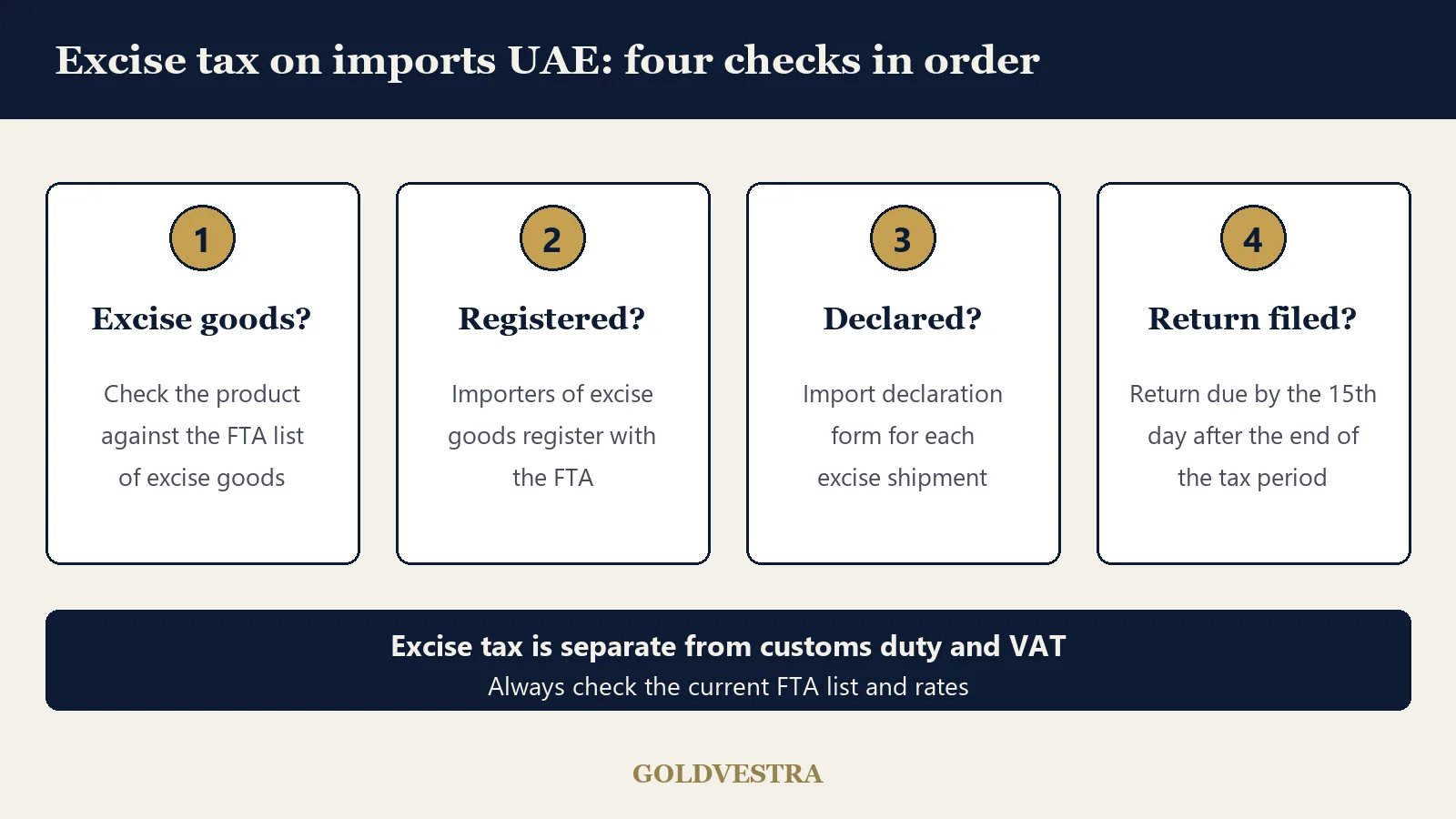
For excise tax on imports UAE-wide, the FTA explains that a registered business files an excise tax return by the 15th day following the end of each tax period. The return is populated from the declaration forms you complete during or at the end of the period.
For importers, the key form is the Excise Tax import declaration form. Other forms cover production, release from a designated zone, and deductible excise tax.
The FTA’s Importers scenarios guide says the declarations you make depend on your registration status and business activity. That includes whether the goods go into a designated zone or straight to the market.
The pages we reviewed do not say that the tax is always paid at the border. Whether it is settled with the return or in another way depends on your status. Ask your broker and read the FTA returns and payment guides for your case.
If you pay more excise tax than you owe, the FTA says an excess refundable amount may be claimed. That applies when deductible tax exceeds the tax payable in a return.
If the shipment arrives before the paperwork is ready, delays follow. Our customs clearance in Dubai guide shows where documents usually hold up the clearance.
Excise tax on imports UAE vs customs duty and VAT
Excise tax on imports UAE sits beside two other charges on one shipment. Do not mix them up in your landed cost sheet.
- Customs duty is charged on the customs value of the goods. See UAE import duty and customs value.
- VAT is accounted for on imports at 5%. See VAT on imports in the UAE.
- Excise tax is a separate tax on the excise goods listed by the FTA, with its own registration, declarations and returns.
Do not assume the three are calculated on the same base. Customs duty uses the customs value. Excise tax on imports UAE-wide uses the excise price described above. Check the FTA’s VAT guidance on whether excise tax payable forms part of the VAT value of imported excise goods, and let your broker confirm it before you build a quote.
If you are planning a first order of excise goods, a quote request to our team is a good place to list product, origin and destination so the documents are mapped early.
Pre-shipment checklist for excise tax on imports UAE
- Match each product to the current FTA list of excise goods.
- Confirm whether your company is registered for excise tax as an importer.
- For sweetened drinks, ask the supplier for total sugar per 100 ml and check how the product is registered.
- For tobacco, ask your broker about the Digital Tax Stamp scheme.
- Decide whether the goods go to a designated zone or to the market, and read the matching FTA guide.
- Work out the excise price, not only the invoice value, in your landed cost.
- Diarise the return deadline: the 15th day after the end of the tax period.
- Keep invoices, packing lists and declaration forms together.
Common mistakes
- Pricing a quote with duty and VAT only, then adding excise tax on imports UAE later.
- Assuming the supplier handles registration.
- Using an old rate from a blog or an old price list instead of the FTA page.
- Treating all soft drinks alike. Sugar content, juice content and product type change the treatment.
- Missing the return date because the shipment was cleared by a broker.
None of these is hard to avoid if you check the goods before the order, not after the container lands.
Frequently asked questions
Which goods are subject to excise tax on imports UAE-wide?
The FTA lists tobacco and tobacco products, liquids for electronic smoking devices, the devices themselves, carbonated drinks (not sparkling water), energy drinks and sweetened drinks. Lists and rates can be amended, so check the current FTA list for your own goods before ordering.
Do I have to register for excise tax if I import excise goods?
Yes. The FTA says excise tax on imports UAE-wide is the responsibility of any person who imports excise goods into the UAE, produces them for UAE consumption, stockpiles them in certain cases or releases them from a designated zone. Check your registration status before the shipment arrives.
When is excise tax due on imported goods?
A registered business files an excise return by the 15th day following the end of each tax period. The return is built from your declaration forms, including the import declaration form. Whether tax is settled at the border depends on your status, so confirm it for your case.
Is excise tax the same as customs duty or VAT?
No. Customs duty is charged on the customs value, VAT is accounted for on imports at 5%, and excise tax on imports UAE-wide is a separate tax on listed goods with its own registration and returns. They can all apply to one shipment, so keep each line separate in your landed cost.
How is excise tax on sweetened drinks calculated?
From 1 January 2026 the FTA describes a tiered-volumetric model. The tax depends on total sugar per 100 ml and is charged per litre, not as a percentage. Some drinks, such as 100% natural juice without added sugar, are outside the model. Check the FTA page for current amounts.
Related reading
VAT on Imports in the UAE
How importers account for 5% VAT.
UAE Import Duty
How customs duty is calculated.
Customs Value in the UAE
How CIF valuation works.
Customs Clearance in Dubai
Process, documents and delays.
Importing goods that may carry excise tax?
Send us the product, origin and destination. We will help you organise the trade documents for the shipment before you place the order.