
A machine that arrives late, in the wrong voltage or without the right papers can stop a project for weeks. A clear plan to import industrial machinery to UAE prevents most of these problems.
This buyer’s checklist walks through the full path: technical specification, new or used, classification, inspection, heavy transport, customs documents and commissioning. Use it before you sign a purchase order.
It supports our industrial machinery page and builds on our guides to HS code classification and pre-shipment inspection.
In this article
- Start with the technical specification
- New vs used machinery import
- Choose and verify the supplier
- Machinery HS code and duty
- Inspection and testing before shipment
- Heavy and out-of-gauge transport
- Documents and customs clearance
- Installation and commissioning
- The 8-point checklist to import industrial machinery to UAE
- Frequently asked questions
Start with the technical specification
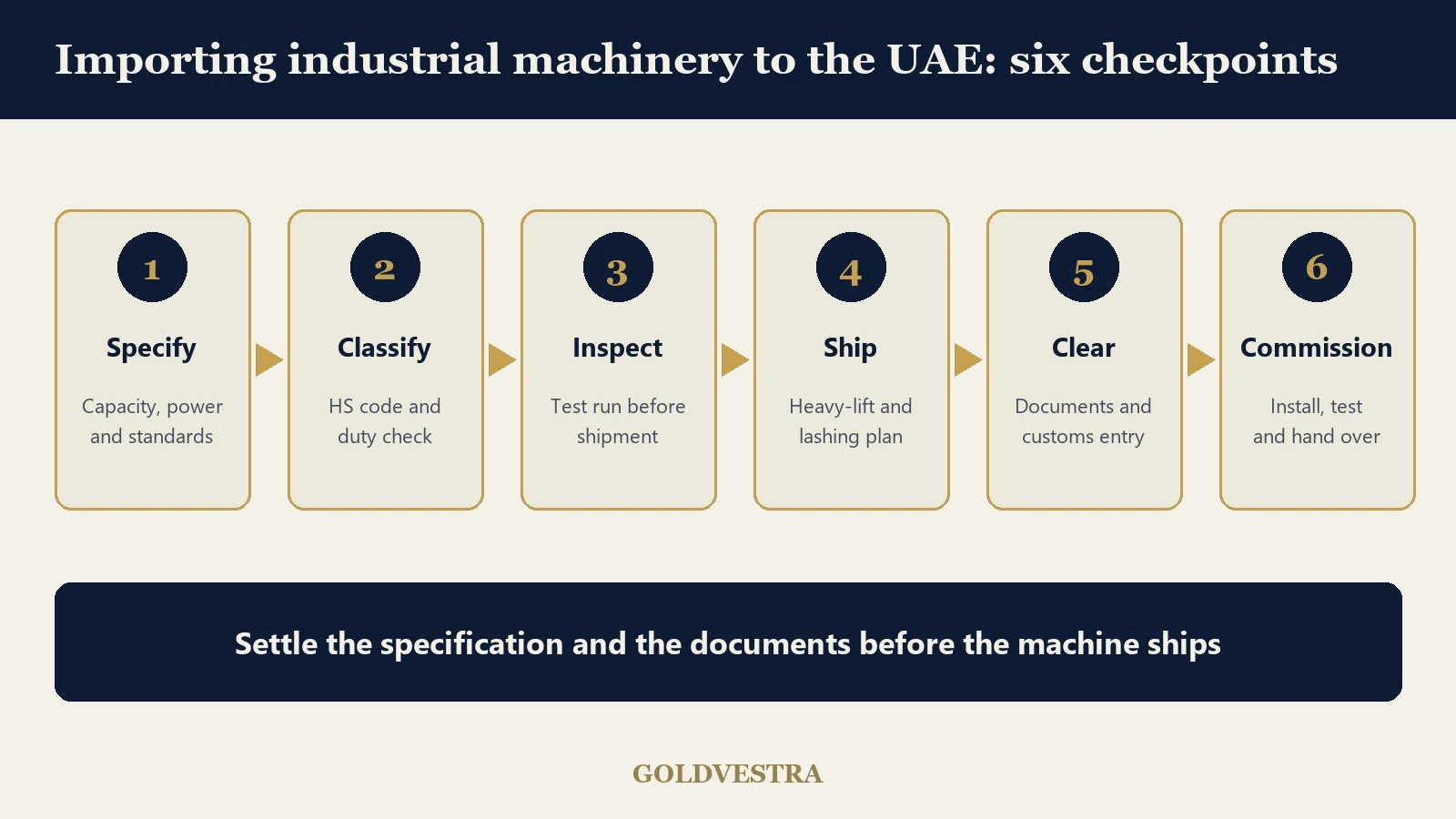
When you import industrial machinery to UAE, most problems begin with a loose specification. Write it down before you ask any supplier for a price. Then use the same document in your RFQ, your contract and your inspection.
- Capacity and output. What the machine must produce, at what speed, in what material.
- Dimensions and weight. Overall size, heaviest single piece and foundation loads. These drive transport and site preparation.
- Power supply. Voltage, phases and frequency. Confirm the site supply with your electrician and match the machine to it, or specify a transformer.
- Operating environment. Heat, humidity, dust and sea air can affect motors, electronics and coatings. Tell the supplier where the machine will run.
- Standards and safety. Ask which safety and quality standards the machine is built to, and ask for the supporting documents.
- Spare parts and manuals. A list of wear parts, a starter spares kit, and manuals in a language your operators read.
Our guide on how to write an request for quotation (RFQ) shows how to turn this list into a request suppliers can price accurately.
New vs used machinery import
Used machinery can cut the purchase price, but the risk moves to you. Neither choice is always right. Compare them on the points that matter to your project.
| Point | New machinery | Used machinery |
|---|---|---|
| Purchase price | Higher | Often lower, varies widely by age and condition |
| Warranty and support | Usually offered by the manufacturer | Limited or none. Get any terms in writing |
| Condition record | Factory test report | Needs an independent inspection and service history |
| Spare parts | Normally available from the maker | Check that parts are still supplied for the model |
| Documents | Manufacturer’s papers and certificates | Chain of ownership, plates and papers can be incomplete |
| Import rules | Standard classification and checks | Rules may differ by category. Confirm before you buy |
Rules for used equipment can differ by machine type and by authority. Ask your customs broker, and check the UAE restricted imports guide, before you commit to a used machine.
Choose and verify the supplier
A machine is only as reliable as the company behind it. Verify the supplier before you pay a deposit.
- Confirm the company is the manufacturer or an authorised dealer, and ask for proof in writing.
- Ask for references of similar machines and contact them yourself.
- Check the support plan: who services the machine in the region and how fast parts arrive.
- For a new manufacturer, review a supplier audit checklist, remotely or on site.
Agree on payment terms that tie money to milestones: deposit, passed factory test, shipment and final acceptance. Avoid paying in full before the machine has passed inspection.
Machinery HS code and duty
Every machine needs a correct tariff code. The code decides the duty rate and which documents customs expects. Industrial machinery is mostly found in Chapter 84 of the Harmonized System, and electrical equipment in Chapter 85.
A machinery HS code can be hard to pick, because many machines combine mechanical and electrical parts. Do not guess. Work through our guide to HS code classification and ask your customs broker to confirm the code in writing.
- Send the broker the datasheet, model number and a clear description of the machine’s main function.
- Use the same description and code on the commercial invoice, packing list and bill of lading.
- Check the duty and VAT impact in advance. See our UAE import duty guide for how duty is calculated.
A wrong code can lead to delays, extra charges or questions at clearance. It is cheaper to confirm the code before the machine ships.
Inspection and testing before shipment
Once a machine is in a container or on a truck, any defect costs far more to fix. A pre-shipment inspection lets an independent party check the machine while it is still at the supplier.
Factory acceptance test
A factory acceptance test (FAT) runs the machine against your specification at the supplier. Agree the test plan in the contract, and attend or send an inspector.
What to check
- Nameplate data, serial number and model match the order and the papers.
- The machine runs through its main functions, under load where possible.
- Safety devices, guards and emergency stops work.
- For used machines: wear, leaks, play in moving parts, service history and any repairs.
- Photos and video of the machine, the test and the packing.
Do not release the final payment until the test report shows the machine meets the specification. Record every deviation and how the supplier will fix it.
Heavy and out-of-gauge transport
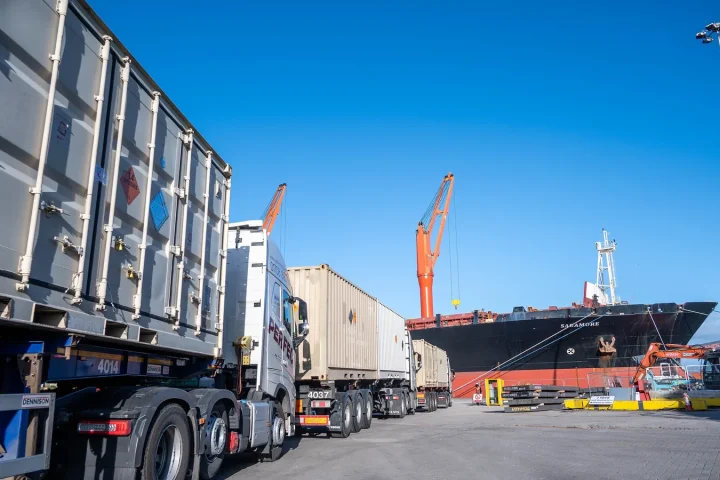
Machines rarely fit a standard container, so freight is the costliest surprise when you import industrial machinery to UAE. The transport plan depends on size, weight and how the cargo can be lifted and secured.
| Cargo situation | Typical option | Plan for |
|---|---|---|
| Fits inside a standard container | Container, secured inside | Blocking and bracing, weight limits |
| Too wide or tall for a container | Flat rack or open-top container | Lashing, lifting points, over-dimension charges |
| Wheeled or tracked equipment | Roll-on/roll-off (RoRo) vessel | Vessel schedule, ramp access, condition at loading |
| Very heavy or oversized pieces | Breakbulk or project cargo | Heavy-lift equipment, port handling and permits |
Ask the supplier for exact dimensions, weights and lifting points early. Choose the shipping terms with care: terms such as EXW, FOB or CIF split cost and risk differently. See the official ICC Incoterms guidance for the rules.
Machines are high-value and easy to damage, so arrange cargo insurance that covers the full journey. If you are unsure who handles what, read our guide on freight forwarder vs customs broker.
Documents and customs clearance
Customs needs consistent documents, and every shipment of machinery is checked against them. Importing industrial machinery without a matching set slows the whole job. Errors between papers are a common reason for delays. Our international trade documentation checklist covers the full set. For machinery, expect to prepare at least these:
- Commercial invoice and packing list with the same description, model and serial numbers.
- Bill of lading or airway bill.
- Certificate of origin, where required.
- Technical datasheet, manuals and any conformity or test certificates the machine category needs.
- For used machinery: proof of age and condition, and any papers your broker requests.
Your customs broker files the declaration and handles inspection questions. Read how customs clearance in Dubai works, so you know the steps and who is responsible for each. The U.S. International Trade Administration also lists common export documents.
Start document checks before shipment, not after arrival. Port storage and container delay charges add up quickly while a machine waits for a missing paper.
Installation and commissioning
Machinery installation and commissioning is part of the import, not an afterthought. Plan it while the machine is still being built, whatever the size of the machine.
- Prepare the site. Foundation, floor load, access route, power, air, water and drainage, as the supplier’s drawings require.
- Plan the lift. Book a crane or heavy-lift equipment for the delivery day, and check access for the truck.
- Assign responsibility. Decide in the contract whether the supplier supervises installation, and who pays for engineers and travel.
- Commission and test. Run the machine against the specification on site. This is the site acceptance test.
- Train operators. Agree training hours and materials before you pay the final instalment.
- Record the handover. Sign a handover document, and keep the manuals, certificates and test results in one file.
Tie the final payment to commissioning, not to arrival. That keeps the supplier committed until the machine works.
The 8-point checklist to import industrial machinery to UAE
Use this list to review your plan before you pay a deposit.
- Specification written and shared: capacity, size, power, environment and standards.
- New or used decided, with condition evidence for any used machine.
- Supplier verified as manufacturer or authorised dealer, with references.
- HS code confirmed in writing by your customs broker.
- Factory test and inspection agreed in the contract.
- Transport plan matched to size and weight, with insurance and agreed shipping terms.
- Documents checked for consistency before the machine ships.
- Installation and commissioning planned, with final payment tied to acceptance.
If you can tick all eight, the import is far less likely to stall at the port or on site. If you want help to import industrial machinery to UAE, you can request a quote and tell us the machine, the site and the timeline.
Frequently asked questions
How do I import industrial machinery to the UAE?
Write a technical specification, choose and verify a supplier, confirm the HS code, inspect the machine before shipment, arrange suitable transport and insurance, and prepare consistent customs documents. A customs broker files the declaration. Plan installation and commissioning before the machine ships.
What is the HS code for industrial machinery?
Most industrial machinery falls under Chapter 84 of the Harmonized System, and electrical equipment under Chapter 85. The exact code depends on the machine’s function and design. Ask your customs broker to confirm the code in writing before shipment.
Can I import used machinery into the UAE?
It is possible, but rules can differ by machine category and by authority. Used machines also carry more risk, so you need an inspection report and service history. Confirm the requirements with your customs broker before you buy.
What documents do I need to import machinery?
Typically a commercial invoice, packing list and bill of lading or airway bill, plus a certificate of origin where required. Add the datasheet, manuals and any certificates your machine category needs. Descriptions and serial numbers must match across all documents.
How is oversized machinery shipped?
Machines that do not fit a standard container usually travel on flat-rack or open-top containers, roll-on/roll-off vessels or breakbulk. The choice depends on size, weight and lifting points. Ask your forwarder for a transport plan with exact dimensions.
Who handles installation and commissioning?
It depends on the contract. Many suppliers offer engineers to supervise installation and run the site acceptance test. Agree who provides labour, who pays for travel, and the training scope, and tie the final payment to a signed handover.
Related reading
Industrial Machinery
How we support machinery sourcing for B2B buyers.
HS Code Classification
Pick the right tariff code before you ship.
Pre-Shipment Inspection Guide
Check the goods before they leave the supplier.
Freight Forwarder vs Customs Broker
Who handles which part of the move.
Cargo Insurance for Importers
Cover the full journey of high-value cargo.
Planning a machinery import?
Tell us the machine, quantity and site. We will review the sourcing and import steps with you and follow with a proposal.