
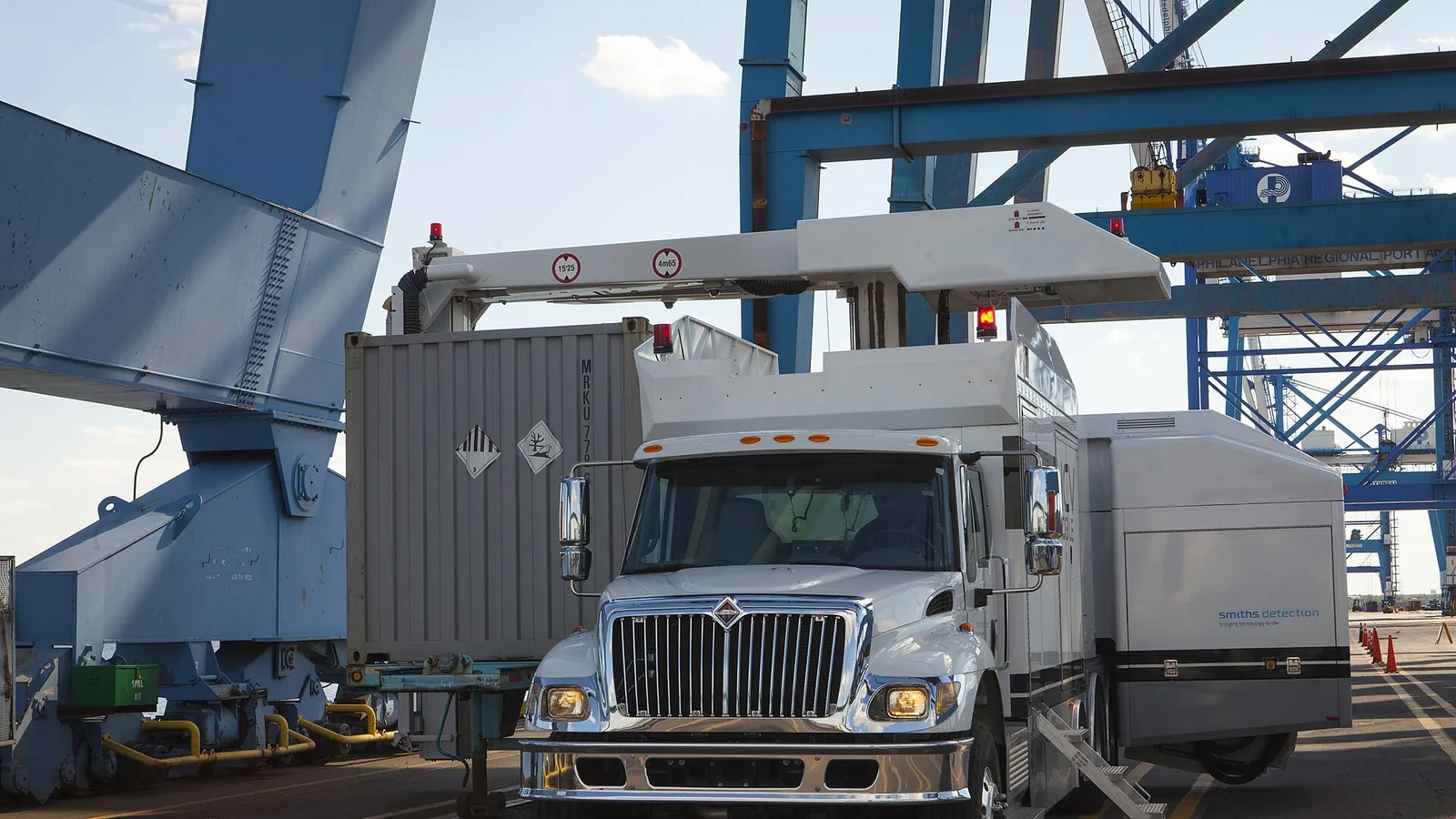
You have found a supplier, the goods are on the way, and someone tells you the declaration has to go through Mirsal 2. If you are a first-time importer in Dubai, that name can feel like one more hurdle between you and your cargo.
This guide explains Mirsal 2 in plain terms: what the system is, who can use it, how access works and what a declaration needs. It also shows when a customs broker makes more sense than filing yourself.
It is general information, not legal advice. Dubai Customs sets the rules, fees and forms, and they change, so confirm the current steps on the official channels before you file.
In this article
What Mirsal 2 Is
Mirsal 2 is the electronic customs declaration system of Dubai Customs. Importers, exporters and their agents use it to submit customs declarations online instead of filing paper at a counter.
Dubai Customs says it developed the system in-house. In its Dubai Customs announcement on the move from Mirsal 1, it describes the aim as letting clients clear and process transactions at any time, 24 hours a day. The Gulf News report on the system launch adds that the system is meant to speed up business procedures while keeping national security in view.
The name is often written Mirsal II. People also call it the Dubai Customs electronic system. It replaced the older Mirsal 1 for most commercial declarations. The same announcement lists a few services that stayed on Mirsal 1 at the time, so treat that page as history, not as the current rulebook.
Why This System Matters for New Importers
Every commercial shipment that enters Dubai needs a customs declaration. The declaration tells customs who is importing, what the goods are, where they come from and what they are worth. Duty and release depend on it.
If you are new, you will meet Mirsal 2 early. Your clearing agent may ask for your customs code. Your port or airport paperwork may refer to a declaration number. A wrong entry can slow the cargo, so it helps to know what happens behind the screen.
Our guide to customs clearance in Dubai covers the wider process, from arrival to release. This article zooms in on the system where the declaration lives.
Who Can Use Mirsal 2
Access to Mirsal 2 is tied to registration with Dubai Customs. In practice, three kinds of users appear:
- Registered companies that hold their own customs code and file their own declarations.
- Licensed customs brokers and clearing agents that file on behalf of importers.
- High-volume business clients that may connect their own systems to Dubai Customs. The Dubai Customs notice on its business-to-government service describes this kind of direct link.
If you are not registered, Dubai Customs has long pointed clients to two routes: register yourself, or let a registered customs broker conduct the declaration for you. Both routes are listed in the Dubai Customs announcement on the move from Mirsal 1.
Your trade licence and your import code are related to your customs registration but are not the same thing. Read our guide to the Dubai import export code to see how the pieces fit.
How Access Works
Dubai Customs and Dubai Trade publish the official steps. The Dubai Trade help page on applying for a Dubai Customs code is the place to start. The exact forms, documents and fees can change, so we do not copy them here.
In general, a company can expect this sequence:
- Check that the trade licence covers the activity you plan, such as trading in the goods you import.
- Create the required account on the Dubai Trade portal and apply for the customs code for your company.
- Provide the company details and supporting documents the portal asks for, and make sure they match the licence.
- Wait for approval, then confirm that your code works for the declarations you plan to file.
- Decide who will file: your own trained staff or a customs broker.
Names for the code vary in daily talk: customs code, client code, importer code. If an agent uses one of these, ask which exact code they need so nothing is delayed.
How a Mirsal 2 Declaration Moves
The details differ by port, mode of transport and goods. The overall path is similar for most importers.
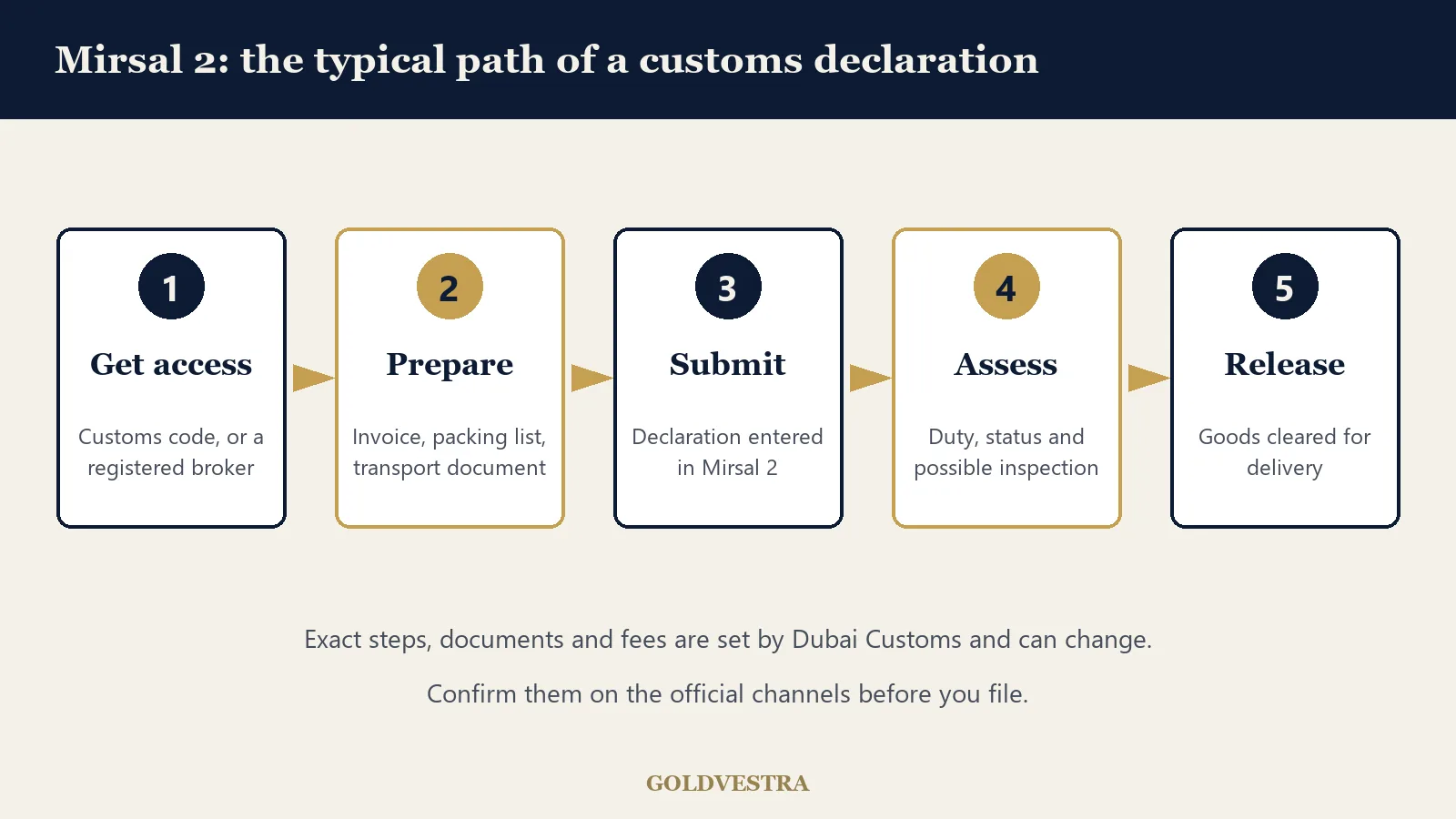
Step 1: Access and set-up
Before anything is filed, the importer or the broker needs working access. This is why registration should happen before the cargo ships, not after it lands.
Step 2: Gather the shipment data
The declaration is built from your shipping documents. The details must agree across all of them. We cover the main documents in the next section.
Step 3: Submit the declaration
The declarant enters the shipment details in Mirsal 2 and submits them. The declarant is the importer or the broker acting for the importer. Accuracy matters most at this point: product description, value, origin and classification.
Step 4: Assessment and possible inspection
Customs reviews the declaration, calculates what is due and may select some shipments for checks. Whether a shipment is checked depends on customs risk assessment, not on anything you can request.
Step 5: Release
Once the declaration is accepted and the formalities are met, the goods can be released for delivery. Your forwarder then needs the delivery order from the carrier to collect the cargo.
What You Need Before You Declare
A customs declaration is only as good as the paperwork behind it. Most delays start with documents that do not match.
| Document | Why the declaration needs it |
|---|---|
| Commercial invoice | Shows the buyer, seller, goods and value that duty is based on. |
| Packing list | Shows packages, weights and contents, so customs can match them to the cargo. |
| Bill of lading or air waybill | Proves the contract of carriage and links the declaration to the shipment. |
| HS code details | Classifies the goods, which drives duty and any control requirements. |
| Certificate of origin, if relevant | Supports the origin claim, for example when a preferential rate may apply. |
| Permits or approvals, if relevant | Some goods need approval from another authority before release. |
Check the commercial invoice and packing list against each other. The values, quantities and descriptions must agree. Our guide to the bill of lading shows the fields that most often contain errors.
Classification deserves extra care. A wrong HS code can change the duty and trigger questions. Settle it with your supplier and your agent before you submit.
If you want a second pair of eyes on the file, our trade documentation service reviews the paperwork before your shipment moves.
Self-Filing or a Customs Broker
Both routes lead into Mirsal 2. The difference is who operates it.
| Filing yourself | Using a customs broker | |
|---|---|---|
| Access | Your company needs its own registration and trained users. | The broker uses its own registration and access. |
| Effort | You handle data entry, corrections and follow-up. | The broker handles entry and follow-up for you. |
| Control | You see every detail first-hand. | You depend on the broker’s accuracy, so you must brief them well. |
| Fit | Regular importers with in-house customs know-how. | New or occasional importers, or complex shipments. |
Many new importers start with a broker and bring filing in-house once their volume grows. Remember that a broker files from the data you give. If your invoice or HS code is wrong, the declaration will be wrong too. Read freight forwarder vs customs broker to see how the roles differ and where each one stops.
Common Mistakes New Importers Make
- Leaving customs registration until the cargo is already at the port.
- Sending the broker an invoice that does not match the packing list.
- Guessing the HS code instead of confirming it.
- Using a vague product description such as “spare parts” or “goods”.
- Assuming the supplier’s freight forwarder files the Dubai declaration. Always confirm who does.
- Relying on an old guide for fees, forms or deadlines instead of checking the official page.
None of these problems comes from the system itself. They come from missing preparation. A short check before you submit saves far more time than a correction afterwards.
Quick Checklist
- Confirm your trade licence covers the goods you import.
- Apply for your customs code well before the first shipment.
- Decide whether you or a broker will use the system.
- Collect the invoice, packing list and transport document.
- Confirm the HS code and any permit needs.
- Compare every document for matching values, quantities and names.
- Check the current steps and fees on the official Dubai Customs and Dubai Trade pages.
For another official source on customs procedures, see the Dubai Customs FAQ.
Frequently asked questions
What is Mirsal 2?
Mirsal 2 is the electronic customs declaration system of Dubai Customs. Importers, exporters and licensed brokers use it to submit and track customs declarations online. Dubai Customs says it developed the system in-house so clients can process transactions around the clock instead of visiting a counter.
Do I need Mirsal 2 access to import goods into Dubai?
Your goods need a customs declaration, and that declaration is filed through Mirsal 2. You can register your company to file it yourself, or you can appoint a registered customs broker to file for you. Which route suits you depends on your volume and experience.
How do I register for Mirsal 2?
Registration starts with your valid trade licence and an account on the Dubai Trade portal, where you apply for a Dubai Customs code. Required documents and fees can change, so follow the current Dubai Trade help pages. Many new importers use a broker while their own registration is processed.
Can a customs broker use Mirsal 2 for me?
Yes. Dubai Customs has long listed hiring a registered customs broker as an alternative to registering yourself. The broker submits the declaration from the documents you provide, so your invoice, packing list and HS code must be accurate. Agree who is responsible for each step in writing.
What documents does a Mirsal 2 declaration need?
Typically the commercial invoice, packing list, bill of lading or air waybill and the HS code details. A certificate of origin or a permit may also be needed, depending on the goods. Requirements vary by shipment, so confirm the list with your broker or Dubai Customs.
Related reading
Customs Clearance in Dubai
The wider process from arrival to release.
Dubai Import Export Code
How importers register, step by step.
Freight Forwarder vs Customs Broker
Who does what on your shipment.
Want your import paperwork checked before you declare?
Send us your product, origin and shipping documents. We will help you review the trade paperwork before the declaration is filed.